FLOOD, EARTHQUAKE, STORM, FIRE, POWER OUTAGE
Are you prepared?
If not, protect your family or yourself for under $160.00
Chef’s Banquet All-purpose Readiness Kit 1 Month Food Storage Supply (330 Servings)


- The WNBA’s identity crisis is bigger than basketball
 by Stefan Padfield on August 29, 2026 at 7:00 pm
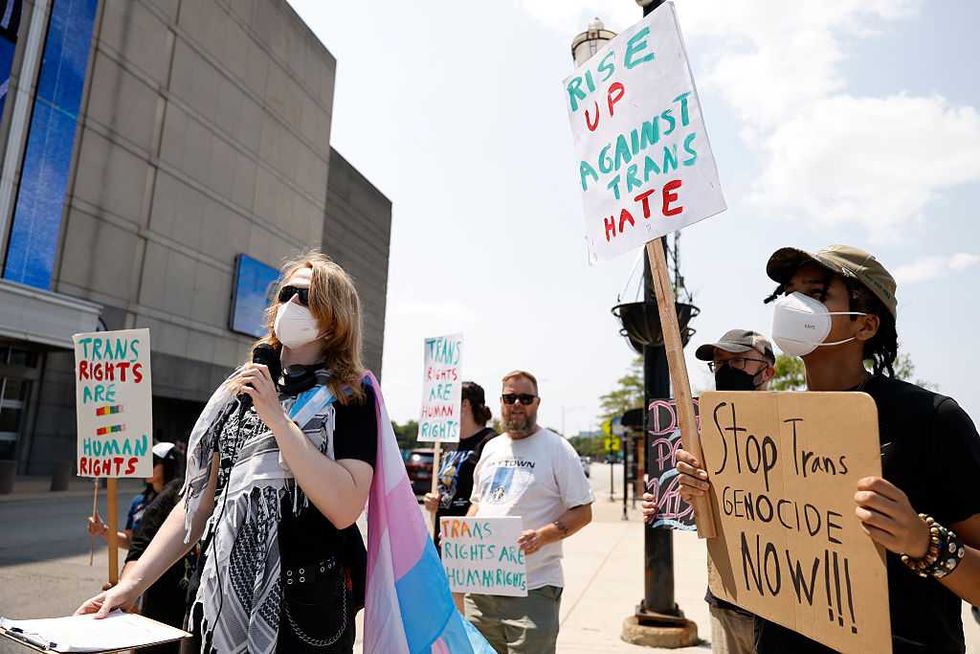
With the “Women’s” NBA twisting itself into knots rather than plainly defining woman, gender ideology is back in the news.The first problem is linguistic. Using “gender” when one means sex invites confusion. Jay Richards has explained gender ideology as the view that the sex binary does not fully describe human identity and that a person may possess an internal “gender identity” incongruent with sex.‘The issue is never the issue. The issue is always the revolution.’That framework helps explain a related question: Why can stating ordinary biological distinctions provoke such extraordinary hostility — even death threats — when the dispute concerns women’s sports and other sex-separated spaces?One answer is that the argument is not only about biology. It also draws on an older revolutionary tradition that treats inherited institutions and categories as instruments of domination. Hence the old line: “The issue is never the issue. The issue is always the revolution.”Start with Marx and Engels. In “The Communist Manifesto,” they called for “the most radical rupture with traditional relations” and “traditional ideas,” while attacking private property, religion, and the bourgeois family. Paul Kengor has written that later leftist movements continued this attack on traditional marriage and family.The intellectual path from Marx to contemporary gender theory is not a straight line, however. Antonio Gramsci did not simply replace economics with culture; he broadened Marxist analysis by emphasizing culture, institutions, and “hegemony” as sources of social power. What is commonly called cultural Marxism grew from this shift in emphasis.Herbert Marcuse likewise looked beyond the industrial working class to marginalized groups as possible agents of radical change. Rudi Dutschke popularized the idea of a “long march through the institutions,” while Mike Gonzalez has noted the Gramscian strategy of a long-term “war of position” aimed at reshaping culture before political victory.Critical theory pushed the analysis further. Frankfurt School thinkers such as Marcuse and Max Horkheimer examined capitalism, authority, culture, and repression through a Marxist-Freudian lens. Other Frankfurt School theorists treated social structures — including family and sexuality — as possible mechanisms of domination.Postmodern and deconstructionist thinkers such as Michel Foucault and Jacques Derrida came from different traditions, but their work converged with critical theory on one crucial point: suspicion toward claims of neutral, universal truth. In this intellectual climate, truth itself was dismissed by some theorists as inseparable from power.RELATED: Enes Kanter Freedom said the quiet part out loud Joseph Weiser/Icon Sportswire/Getty ImagesAs Bishop Robert Barron has written in a related discussion of deconstruction, “There is no final truth, no ultimate settling of a question. There is always something new.” Once inherited categories are treated principally as products of power, even apparently basic questions — “What is a woman?” — become open to endless renegotiation.Judith Butler’s 1990 book “Gender Trouble” brought these currents directly into gender theory. Butler argued that gender is performative and challenged the stability of the sex/gender distinction and traditional sex roles.This does not prove that every person who supports transgender rights is a Marxist, or that modern gender theory can be reduced to a single ideological source. It does show why the rhetoric so often sounds revolutionary rather than merely therapeutic.When transgender discrimination is called the “civil rights issue of our time,” the claim places gender identity within a familiar oppressor-oppressed framework. Christopher Rufo has said that some trans activists explicitly describe their movement as a successor to Marxism, with transgender people cast as a new revolutionary vanguard.That is the more defensible connection. Gender ideology did not simply fall out of “The Communist Manifesto.” It developed amid intellectual traditions that increasingly interpreted social categories through power, oppression, liberation, and the deconstruction of inherited norms.Its political alliances reinforce the point. Gender politics routinely appears among the current things the activist left leverage as part of its war on capitalism and Western civilization generally. Jonathan Butcher has noted how intersectionality explicitly links “identity movements based on gender and racial liberation” through a common theory of social domination.From Black Lives Matter co-founder Patrisse Cullors describing herself as a “trained Marxist” to the pro-Hamas red-green alliance that includes Queers for Palestine, the coalition repeatedly joins causes that appear unrelated on the surface but share a politics of oppression and liberation.The issue is not always literally the issue. Increasingly, the issue is the revolution.
- Nick Freitas says young Americans aren’t ‘asking for too much’ — your grandpa really did have a better deal
 by BlazeTV Staff on August 29, 2026 at 6:00 pm
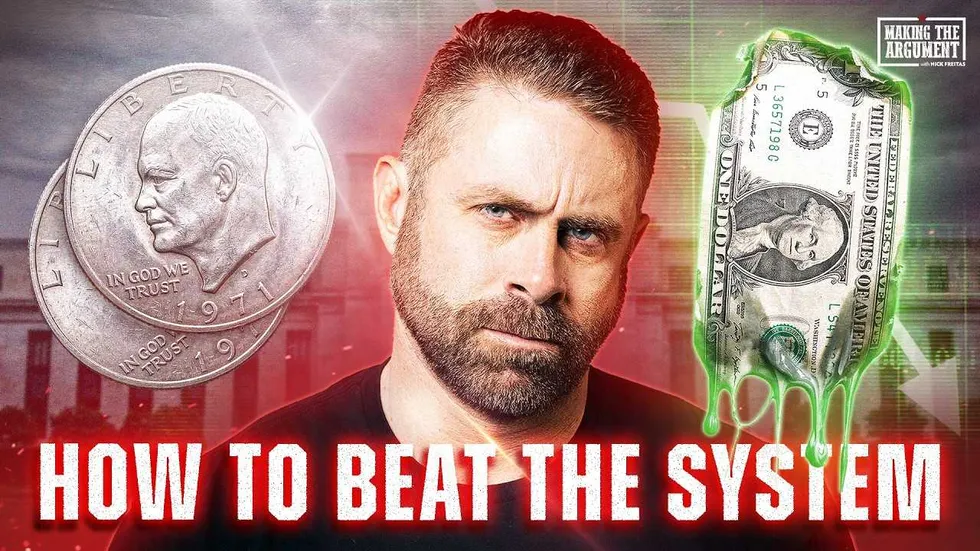
Are young Americans expecting too much, or has homeownership genuinely become out of reach? According to BlazeTV host Nick Freitas, the answer is obvious. While older generations often point to bigger homes and modern amenities to explain rising housing costs, Freitas says the data tells a different story. Even after accounting for those differences, the cost of buying a home has skyrocketed relative to income, leaving many young people feeling frustrated and demoralized. “When younger people are saying that they have a real problem here, that they’re frustrated, that they’re demoralized, you can’t just dismiss that as, 'Well, they’re being demoralized by TikTok or online or whatnot,'” Freitas says. “One of the things in this is every time this gets brought up, people will say, ‘Well, yeah, you can't compare a home in 2026 that is 2,500 square feet and four bedrooms and has all these amenities and central heating and air with what your grandpa bought on a single income that was an 800-square-foot, two-bedroom house with no AC,’” he explains. “That’s all fair, but when you account for all of that, when you account ... for all of these other factors, what you end up finding out is that the median house price is still significantly higher. Not like a little bit. It’s not like it’s gone up 20%. No, it’s significantly higher,” he continues. “Now all of a sudden, it’s far more difficult to buy that first house, and what everybody is telling you is, ‘Well, you just need to work harder’ or ‘you expect too much,’” he adds. But, Freitas says, they’re not expecting too much, pointing out that if you want to buy a home close to where you work, depending on where that is, an 800-square-foot home could run you close to a million dollars. “You’ve got building codes, and you’ve got taxes. You’ve got multiple factors impacting that price,” he says. “Your income is never catching up with what you actually need to live. And that is a very real and a very genuine concern,” he continues. “And again, if we have people just easily dismissing this, they are missing the point.” “Making the Argument with Nick Freitas” is available on BlazeTV+, YouTube, and major podcast platforms.Start watching Nick Freitas NOW at blazetv.com and use the promo code NICK40 for $40 off your BlazeTV+ subscription.
- Bill Gates just revealed his brand-new plan to save America — and China — from tech apocalypse
 by John Mac Ghlionn on August 29, 2026 at 4:30 pm
Bill Gates is a repugnant individual. He puts the ick in sick, the sin in sincere, and the con in concern. But rest assured, he cares deeply about your well-being and the future of the human race.The bespectacled billionaire recently penned a remarkably revealing essay. The central message is that although AI is probably coming for your job, your social life, your education, your children, and perhaps your sanity, he has a plan.This two-facedness is infuriating, but it’s an old trick.Gates argues that AI “can substitute for human cognition” and that “many jobs will disappear forever.” He even says that if someone had a credible plan to slow AI globally, he would “likely support it.” But, conveniently, he immediately concludes that this isn’t "going to happen,” so we’d better learn to live with this rather depressing reality.And who helped build the world in which this revolution became possible? Gates’ own Microsoft is now one of the biggest players in AI. Gates acknowledges that he still has “financial ties to” the tech industry, then assures us his views aren't motivated by money. Believing that takes a level of blind faith usually reserved for doomed cults.The giveaway is his proposed solution.Meet “Human Reserved,” a tiny tax-bracket sanctuary where some of us get to exist like protected wildlife. Don’t save work because human beings deserve meaningful lives; reserve some jobs because society still needs people employed. Although Gates talks about the “broader value of work,” the argument keeps circling back to stability, government funds, and the social consequences of mass unemployment.That’s the true nightmare keeping him up at night. Starving people don’t splurge, and desperate people tend to break things. His concern is not that lives will be ruined, but that an economy without paychecks stops consuming. He wants us to revere him as a high-minded public intellectual, yet he operates like a landlord calculating how much mold a tenant will tolerate. He advocates for AI taxes and automation caps with one hand while funding the companies behind the technology with the other. Preserving a few human roles in nursing homes and kindergartens is less an act of mercy than a recognition that a fully automated world could harm his bank balance.RELATED: 'Cookie stuffing': Did Bill Gates' daughter use an illegal trick that sent top tech execs to prison? Vanz Studio/Getty Images He notes rather glibly that he likes the phrase "Human Reserved" because it makes him "think of nature reserves." In his eyes, human labor is no longer an organic expression of dignity, purpose, or community. Instead, it’s more like an endangered species trapped inside a fenced-off sanctuary, permitted to exist solely because the park ranger feels an odd burst of sentimentality. He treats working-class survival like a protected wetland. Essentially, a scenic spot where we could build data centers, but we choose not to because the sight of total extinction gives him a slight headache. It’s the ultimate condescension: an absolute elitist granting us a small, artificial habitat to graze in while he clears the rest of the forest for his server farms.Shortly after his patronizing essay was published, word emerged that Gates is actively arranging a trip to Beijing to meet personally with Xi Jinping.The Manchurian candidateChina spends millions of dollars every day running continuous cyber operations against American infrastructure, stealing military IP, and breaching government servers. Yet this supposedly great American philanthropist wants to help the Chinese Communist Party navigate the risks of the very technology it actively weaponizes. He plays the homegrown hero, preaching the need to protect American workers and secure the nation, while simultaneously plotting to help a strategic rival become more powerful. Gates wants to discuss global safety standards with an authoritarian regime, acting as a self-appointed shadow secretary of state.This two-facedness is infuriating, but it’s an old trick in the slimy septuagenarian’s playbook.In the 1990s, when the Department of Justice dragged Microsoft into federal court for using its desktop monopoly to strangle Netscape Navigator, the world got a front-row seat to the real Bill Gates. The trial exposed a savvy street fighter who treated entire software sectors like nuisance weeds in his garden. Rather than outcompeting his rivals, he wanted to cut off their oxygen supply. He spent that decade playing the ruthless corporate terminator, extracting tribute from every PC sold on earth, and turning the free market into his personal fiefdom.When the antitrust hammer finally came down, he didn't change his nature. But he did change his wardrobe. He swapped the courtroom depositions for knitted sweaters and rebranded overnight as America’s doting uncle. But the killer instinct never vanished. The same instinct that drove him to annihilate competing web browsers now drives him to carve up the future of global technology with Beijing, ensuring that he controls the rules of the game no matter which superpower wins.RELATED: Doc dump reveals top secret Bill Gates clearance during COVID years David Paul Morris/Bloomberg/Getty Images This is not an exaggeration. Xi has described Gates as an “old friend” — indeed, his “first American friend.” A friend of China is no friend of America. And Bill Gates, a man actively liquidating the livelihoods of the domestic workforce while offering to manage their post-economic survival, is certainly no ally of the everyday, decent, hardworking American.Gates wants software algorithms to process trade decisions, draft legal documents, write code, and manage logistics chains. In exchange, he generously offers to let humans retain a few low-margin positions in elder care and education. How kind of him.Those specific fields survived his filter for an obvious reason. Software can’t change a physical diaper or offer genuine affection to an aging patient. He frames these designated human roles as an act of moral generosity, when he’s actually just identifying the physical tasks that robots can’t perform.Only the most foolish would mistake his ruthless risk management for human compassion, and only the most foolish would believe that Bill Gates cares at about our well-being.
- Pastor Josh Howerton: The left's 'neutral' worldview is more superstitious than Christianity
 by BlazeTV Staff on August 29, 2026 at 3:00 pm
For years, Americans have been told that faith belongs in church while public policy should be guided by supposedly neutral, secular principles.But BlazeTV host Allie Beth Stuckey says that distinction is a fiction, as progressives beliefs are not neutral at all — and somehow make their way into plenty of public policy.“I also notice this idea that you know, we can leave our Christian faith behind and then when we go into the public sphere, we don this like neutral secular ideology, but this neutral secular ideology says that babies don’t become people until they go through the birth canal,” Stuckey tells Pastor Josh Howerton.“That’s a superstitious, nonscientific, weird belief,” she continues, noting that it's not much different than the idea that “kids can be born in the wrong body.”“So people who believe that they get to insert their definitions, their weird beliefs into school curriculum, into public policy, they define policy,” she adds.Our bureaucracy, Stuckey says, is “defined by progressive ideology, which is not neutral,” but instead “superstitious.”“So why does a progressive secularist who has their own dogmas and their own pseudo religion, why is their view seen as neutral?” she asks.Howerton couldn’t agree more.“What you’re talking about is loaded into the phrase, ‘You can’t legislate morality.’ The worldview behind the phrase, ‘You can’t legislate morality,’ is the myth of neutrality,” he says.“It’s a myth of neutrality that there’s some way for us to sort of just order society to where nobody’s beliefs are infringed upon,” he continues, noting that it’s easy to “rip that mask off really fast.”“A great example of this is with abortion. So somebody may say to a Christian that has a consistent pro-life ethic ... ‘Hey, when you advocate for pro-life legislation, you’re trying to force your morality on the mother,’” he explains.“And honestly, the answer to that question is yes. Yes, that is what is trying to happen. But the question is not whether morality is going to get legislated. The question is whose morality is going to get legislated,” he adds.Want more from Allie Beth Stuckey?To enjoy more of Allie’s upbeat and in-depth coverage of culture, news, and theology from a Christian, conservative perspective, subscribe to BlazeTV — the largest multi-platform network of voices who love America, defend the Constitution, and live the American dream.
- Feed has no items.